Many people find it hard to lose weight even when they eat healthy food and exercise regularly. One reason could be that their body cells do not have enough energy to work properly. NAD injections are becoming popular in weight loss treatment because they may help the body produce more energy and support a healthier metabolism.
NAD+ is a natural substance found in every cell of the body. It helps turn the food you eat into energy that your body can use every day. When NAD+ levels become low, people may feel tired, burn fat more slowly, and have more difficulty losing weight. Scientists believe that keeping healthy NAD+ levels may help the body work more efficiently.
NAD injections send NAD+ directly into the bloodstream, which may help the body absorb it better than regular supplements. In 2025, many people are adding these injections to their weight loss plans along with healthy eating, exercise, and other treatments. Learning how NAD+ works can help you decide if it could be a useful part of your own weight loss journey.
What Is NAD+ and Why Does It Matter?
NAD+ is a natural substance found in every living cell of your body. Your body needs it to create energy, repair damaged cells, and keep your metabolism working properly. Without enough NAD+, your body may feel tired and less efficient.
You can think of NAD+ like a rechargeable battery inside your cells. It helps move energy where it is needed so your cells can work normally. This process helps your body make ATP, which is the main source of energy your cells use every day.
There are two forms of this substance: NAD+ vs NADH.
- NAD+ helps collect and carry energy.
- NADH is the form that has already used that energy and needs to be changed back into NAD+.
The balance between these two forms affects how well your cells produce energy. Higher NAD+ levels are linked to better energy production and a healthier metabolism. A higher ratio means more energy output and better metabolic function.
Why NAD+ Levels Fall With Age
Research from the National Institutes of Health shows that NAD+ levels naturally decrease as people get older. Lower NAD+ levels are linked to slower metabolism, low energy, tiredness, and easier fat gain. By the time many people reach their 40s, they may have only about half the NAD+ they had in their 20s.
| Age Range | Estimated Relative NAD+ Level | Common Symptoms |
| 20s | 100% (baseline) | High energy, efficient metabolism |
| 30s | ~75-80% | Slight fatigue, slower recovery |
| 40s | ~50-60% | Noticeable energy drop, weight gain |
| 50s+ | ~40-50% | Metabolic sluggishness, poor sleep |
Key factors that can lower NAD+ levels faster include:
1. Long-term inflammation in the body
2. Poor sleep or lack of quality sleep
3. Drinking too much alcohol
4. Lack of physical activity or sitting for long periods
5. Eating too many high-calorie or processed foods
6. Damage caused by pollution and other environmental toxins
How NAD+ Affects Metabolism and Fat Burning
This is where the science gets especially interesting for people focused on weight loss.
- NAD+ and Sirtuins:
NAD+ directly activates a family of proteins called sirtuins (SIRT1 through SIRT7). These proteins play an important role in energy production, metabolism, and healthy aging. Scientists believe sirtuins help the body work more efficiently and support better weight control.
Specifically, sirtuins help your body:
- Help control fat storage: SIRT1 and SIRT3 may help reduce extra fat buildup in the liver and muscles.
- Improve insulin response: Sirtuins can help body cells respond better to insulin, which may reduce the amount of sugar stored as body fat.
- Increase energy production: SIRT3 helps cells produce more energy from stored fat, which may support a healthier metabolism.
- Help control Hunger: Research suggests sirtuins may work with hormones like leptin and ghrelin, which help control hunger and fullness.
Research published in Cell Metabolism found that increasing NAD+ levels in animals improved energy production in cells and helped protect against weight gain caused by unhealthy diets. Human studies are still being carried out, but early results have shown promising signs.
- NAD+ and AMPK Activation
NAD+ also works with AMPK (AMP-activated protein kinase), which is a system in the body that helps control energy use. When NAD+ levels are healthy, AMPK becomes more active and helps the body manage energy more efficiently.
- Burn fat instead of storing it
- Move more sugar into muscle cells for energy
- Slow down the creation of new fat cells.
This is the same body process affected by Metformin, a common medicine used for diabetes and weight management. Because of this connection, some doctors combine NAD+ treatments with other methods that support metabolism and weight loss.
- NAD+ and PARP Enzyme
Your body is always repairing damage inside its cells, including damage to DNA. Special enzymes called PARPs (polyADP-ribose polymerases) help fix this damage, but they need NAD+ to work properly.
Every day, things like unhealthy food, stress, lack of sleep, pollution, and aging can increase DNA damage in the body. When this damage happens too often, PARP enzymes start using large amounts of NAD+ to keep repairing cells.
As NAD+ levels become lower, the body has fewer resources available for other important jobs like producing energy and supporting a healthy metabolism. This can lead to tiredness, slower fat burning, and lower overall energy levels. In some cases, it may also make weight management more difficult because the body is not using energy as efficiently as it should.
Restoring healthy NAD+ levels may help the body better balance cell repair and energy production at the same time. When enough NAD+ is available, the body can continue repairing damaged cells while also supporting metabolism, fat burning, and normal daily energy levels more effectively.
NAD Injections vs. Oral Supplements: What Is the Difference?
Many supplements on the market are designed to help increase NAD+ levels in the body. Two of the most common are NMN (nicotinamide mononucleotide) and NR (nicotinamide riboside). These supplements are taken by mouth and then changed into NAD+ through several steps inside the body. People use them to support energy, metabolism, and healthy aging.
Why Injections Are More Effective
The main problem with oral supplements is that the body may not absorb them very well. During digestion, a large amount can break down before it reaches the bloodstream. Factors like poor gut health, aging, and certain medications may reduce absorption even more. This means the body may not get the full benefit of the supplement.
NAD injections work differently because they deliver NAD+ directly into the bloodstream or under the skin without going through the digestive system. As a result, more NAD+ can reach the body’s cells more effectively. This higher absorption may help support better energy production, metabolism, and overall cell function.
| Method | Bioavailability | Onset of Effect | Physician Oversight |
| Injections (IV or subcutaneous) | Very high | Hours to days | Yes |
| Oral NMN/NR supplements | Low to moderate | Weeks | No |
| Nasal sprays | Moderate | Days | Rare |
| Patches | Low to moderate | Days to weeks | No |
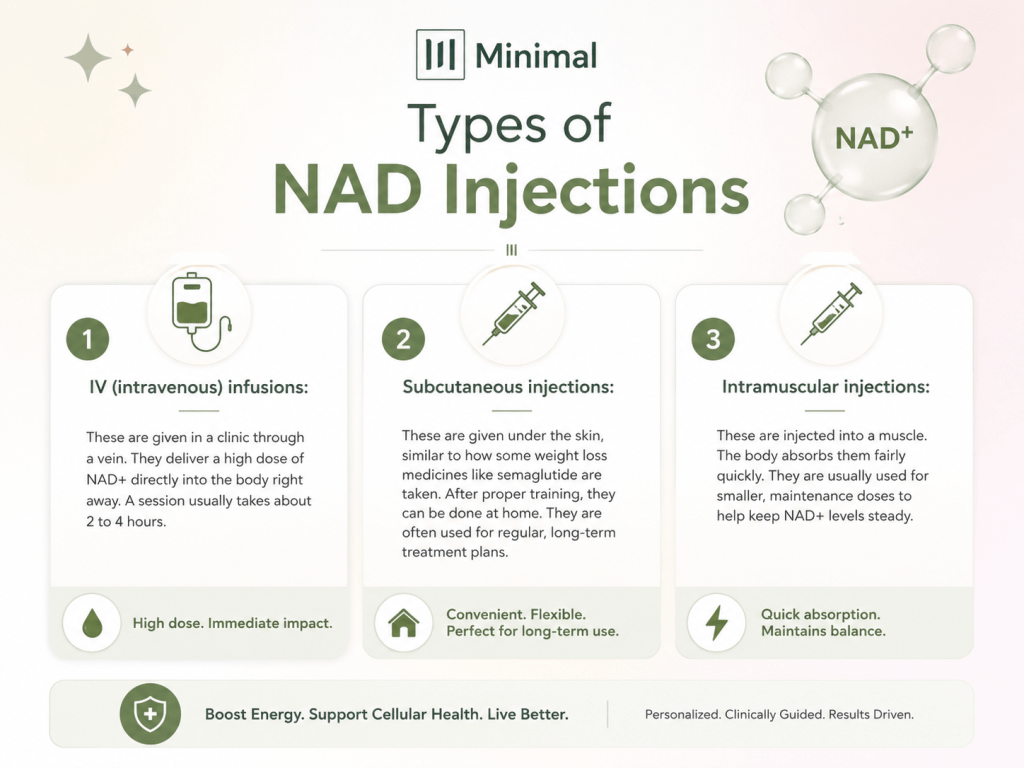
Types of NAD Injections
- IV (intravenous) infusions:
These are given in a clinic through a vein. They deliver a high dose of NAD+ directly into the body right away. A session usually takes about 2 to 4 hours.
- Subcutaneous injections:
These are given under the skin, similar to how some weight loss medicines like semaglutide are taken. After proper training, they can be done at home. They are often used for regular, long-term treatment plans.
- Intramuscular injections:
These are injected into a muscle. The body absorbs them fairly quickly. They are usually used for smaller, maintenance doses to help keep NAD+ levels steady.
Minimal’s physician-supervised protocol uses subcutaneous NAD injections that patients can administer at home after a medical evaluation, making the process more accessible without sacrificing safety.
Who Is Adding NAD Injections to Their Weight Loss Protocol?
NAD injections are not just for elite biohackers anymore. Several specific groups are finding them especially useful.
- People With Metabolic Syndrome
Metabolic syndrome is a group of health problems that includes high blood sugar, belly fat, high blood pressure, and unhealthy cholesterol levels. According to the Centers for Disease Control and Prevention, about 1 in 3 adults in the United States has this condition.
For these people, simple dieting often does not work well because the body’s metabolism is already not working properly. NAD+ therapy may help by supporting the body’s energy systems inside the cells, which can make weight loss easier in some cases.
- People Over 40 With Age-Related Weight Gain
Gaining weight in your 40s and 50s is not only about eating more food. It also happens because the body’s energy levels slowly go down with age. As NAD+ levels drop, the cell “power plants” work less efficiently, so the body burns fewer calories even at rest. Supporting NAD+ levels may help improve this slowdown.
- People Using GLP-1 Medications
Many people using medicines like Semaglutide (Ozempic, Wegovy) or Tirzepatide (Mounjaro) feel tired, especially in the first few weeks. This can happen because these medicines reduce appetite a lot, which lowers calorie intake quickly.
Adding NAD injections to a GLP-1 plan may help:
- Reduce tiredness caused by eating less
- Help protect muscle during fast weight loss
- Support better sleep and recovery
- Improve the body’s energy balance for longer-lasting results
- People With Chronic Fatigue or Brain Fog
A common reason people struggle with weight loss is low energy. When people feel tired, they cannot exercise properly and may make unhealthy food choices. NAD+ is important for brain and cell energy. Some people report feeling more focused and energetic after starting NAD injections, which can help them stick to healthy habits more easily.
The Science Behind NAD+ and Weight Loss: Key Research
The research on NAD+ and metabolic health is still growing, but early studies show promising results. Scientists are studying how it may help with energy, metabolism, and weight control.
Human Clinical Studies
A controlled study published in Nature Communications found that NMN supplements in older adults improved how muscles respond to insulin. This is important because better insulin response helps the body use energy more efficiently and may support fat burning.
Research supported by the National Institute on Health also shows that NAD+ levels are closely linked to age-related slowing of metabolism. In animal studies, restoring NAD+ helped improve several signs of metabolic disease.
A 2023 study in Nutrients found that NAD+ precursors helped improve body composition in overweight adults over 12 weeks. This included reducing deep belly fat and improving blood sugar control.
What Researchers Still Need to Confirm
- The best dose of NAD+ for weight loss
- Long-term safety and effects beyond one year
- Whether results change based on age, gender, or health condition
- The best injection schedule (daily, weekly, or monthly)
Overall, the research is encouraging but still developing. This is why medical supervision is important. A qualified doctor can adjust the treatment based on a person’s health, needs, and goals.
What to Expect When You Start NAD Injections
Understanding the timeline helps set realistic expectations.
First Week
- Most people notice higher energy within 3 to 7 days of starting treatment.
- Some also sleep better within the first few days.
- Mild reactions at the injection site, like redness or a small bump, can happen but usually go away quickly.
Weeks 2 to 4
- Energy levels often become more stable throughout the day.
- Many people feel fewer cravings for sugary foods, which may be linked to better blood sugar control.
- Some report clearer thinking, better focus, and improved mood.
- Workouts may also feel easier to recover from.
Month 2 Onward
- When combined with healthy eating and exercise, gradual changes in body composition may be seen over time.
- Some people also show improvements in health markers like fasting blood sugar, insulin levels, and cholesterol.
- Higher energy levels can make it easier to stay consistent with a weight loss routine.
What NAD+ Will Not Do Alone
- It will not cause major weight loss by itself without changes in diet and lifestyle.
- It does not reduce appetite the way medicines like Semaglutide do.
- Results can vary depending on age, overall health, and how low NAD+ levels are in the body.
How to Use NAD Injections as Part of a Weight Loss Protocol

NAD injections work best when they are part of a structured, personalized plan. Here is how to layer them effectively.
Step 1: Get a Baseline Medical Evaluation
Before starting treatment, it is important to know your current health. Doctors usually test:
- Blood sugar and insulin levels
- HbA1c (average blood sugar over 3 months)
- Cholesterol levels
- Thyroid function
- Overall body health tests
These tests help show how your body is using energy and processing food.
Step 2: Pair NAD+ With the Right Nutrition Plan
NAD+ helps your body make energy, but food is still very important. A diet with enough protein and less processed food helps your body work better.
Research from the National Library of Medicine shows that nutrients like vitamin B3 (niacin) and tryptophan help the body make NAD+. Foods like chicken, turkey, salmon, eggs, peanuts, and mushrooms can support this process.
Step 3: Incorporate Resistance Training
Muscles are one of the main places where NAD+ helps produce energy. More muscle means better energy use. Doing strength training 2 to 3 times a week can improve fat burning and overall energy.
Step 4: Address Sleep
Poor sleep can lower NAD+ levels quickly. The American Academy of Sleep Medicine recommends 7 to 9 hours of sleep every night. Not sleeping enough can stress the body and use up NAD+ faster, which reduces energy and slows metabolism.
Step 5: Consider Combining With Other Medications if Appropriate
Some people may use NAD injections along with medicines like Semaglutide if a doctor recommends it. This can help in two ways: one medicine reduces appetite, while NAD+ helps improve energy inside the cells.
If you are ready to explore a personalized plan that puts all these pieces together, Minimal’s licensed physicians can evaluate your eligibility and build a protocol designed around your specific biology. Learn more about NAD injections at Minimal and see if it is the right fit for your weight loss goals.
Potential Side Effects and Safety Considerations
NAD+ is generally considered safe for most people, but like any treatment, it can have some side effects and is not suitable for everyone.
Common Side Effects
- Injection site reactions: Mild redness, tenderness, or swelling at the injection site. Usually resolves within 24 hours.
- Flushing: More common with high-dose IV infusions. Less common with subcutaneous injections.
- Nausea: Can occur in some patients, especially at higher doses. Usually mild and temporary.
- Headache: Reported by some patients, particularly in the first few sessions.
Who Should Use Caution
NAD+ may not be suitable or should only be used with medical advice for:
- People with active cancer, because NAD+ may support cell growth
- People with severe kidney problems
- Pregnant or breastfeeding women
- People taking certain medicines that affect NAD+ in the body
Always speak with a doctor before starting NAD+ treatment to make sure it is safe for your health condition.
The Importance of Physician Supervision
Using injectable treatments on your own without a doctor’s guidance can be risky. Mistakes in dosing, unsafe or low-quality products from unreliable sources, and hidden health conditions that make treatment unsafe can all cause serious problems.
That is why NAD+ injections should always be used under medical supervision. At Minimal, a medical check is required before any treatment is given. Licensed doctors also track progress during the treatment to make sure it stays safe and effective.
This supervision is not optional. It is an essential part of safe and responsible care.
| Side Effect | Frequency | Severity |
| Injection site reaction | Common | Mild |
| Nausea | Occasional | Mild to moderate |
| Flushing | Occasional | Mild |
| Headache | Occasional | MIld |
| Fatigue | Rare | Mild |
How Minimal Approaches NAD+ for Weight Loss
Minimal is a physician-led weight management platform that offers personalized, science-backed treatments delivered to your door. With a program built on the principle that less complexity and more targeted action produces better results, Minimal integrates NAD injections as one tool within a broader metabolic health strategy.
What sets Minimal’s approach apart:
- Every prescription is approved by a licensed physician, not an algorithm.
- our NAD+ plan is built around your labs, health history, and goals.
- Medication is shipped directly to your door after approval.
- Ongoing access to a Care Team that monitors your progress and adjusts your protocol as needed.
- NAD+ can be combined with other Minimal medications such as semaglutide, tirzepatide, or metformin when appropriate.
Minimal has supported more than 70,000 patients in their weight management journeys. The platform is HIPAA-compliant and designed to fit within your existing routine, not disrupt it.
Conclusion
NAD+ is not just a passing trend. It is a key substance that your body needs for normal energy production and metabolism. Research on how it affects weight loss is still growing, but its role in the body is well established.
As people get older, NAD+ levels naturally drop. When this happens, the body may burn fat more slowly, lose muscle more easily, and feel more tired. NAD injections may help raise these levels more effectively than oral supplements, which the body may not absorb as well.
For people who are stuck in a weight loss plateau, feel low on energy, or are using treatments like GLP-1 medications, NAD+ therapy may offer extra support at the cellular level. It works best when combined with a healthy diet, regular strength training, good sleep, and proper medical care.
If you want to see whether NAD injections are suitable for you, you can book a medical assessment with Minimal. A licensed doctor can then create a personalized plan based on your health and needs.
Frequently Asked Questions
What does NAD+ actually do in the body?
NAD+ is a natural substance in your body that helps turn food into energy. It also activates special proteins that help control fat use, repair DNA, and slow down cell aging. When NAD+ levels are low, your body makes less energy and burns fat less efficiently. Restoring NAD+ may help your body function more like it did when you were younger.
Are NAD injections the same as NMN or NR supplements?
No. NMN and NR are not NAD+ itself. They are substances your body must first change into NAD+ through several steps. During this process, some of it is lost. NAD injections deliver NAD+ more directly, so more of it can reach your cells. For people with low NAD+ levels, injections may work better than oral supplements.
How quickly do NAD injections work?
Many people feel more energy and better focus within 3 to 7 days. Changes in metabolism, like better blood sugar control and body composition, usually take 4 to 8 weeks. Results depend on dose, treatment schedule, and how well it is combined with diet and exercise.
Can I take NAD injections with GLP-1 medications like semaglutide?
Yes. Many people use both together. They work in different ways. GLP-1 medicines reduce hunger and slow digestion, while NAD+ helps the body make energy and burn fat more efficiently. Together, they may help support weight loss, especially if someone feels low energy on GLP-1 treatment.
Is NAD+ therapy FDA approved for weight loss?
NAD+ is not officially approved by the FDA for weight loss. It is sometimes used in medical practice to support metabolism and energy health. This is called “off-label” use. A doctor’s supervision is important to make sure it is used safely and correctly for each person.
Are there dietary changes that support NAD+ therapy?
Yes. Foods like chicken, turkey, salmon, eggs, and mushrooms help the body produce NAD+. These foods contain vitamin B3 and other nutrients needed for NAD+ production. Reducing alcohol is also helpful because it quickly lowers NAD+ levels. Some studies also show that controlled eating patterns, like fasting, may naturally increase NAD+ in the body.
Who is not a good candidate for NAD injections?
People with active cancer, severe kidney disease, or those who are pregnant or breastfeeding should avoid NAD injections unless a doctor says it is safe. Anyone taking medicines that affect energy or metabolism should always inform their doctor before starting treatment.